Removing common stains before the wash
Most marks come out more easily the sooner you get to them. What to do first, what to use on food, grass, collars and dull whites, and when to take it to a cleaner.
A normal wash takes care of everyday dirt. A stain is whatever it leaves behind, and the best time to deal with one is before the garment goes in the machine. Time and heat are what make a stain hard to shift, so the two rules worth remembering are simple: treat it soon, and keep it out of the dryer until it has gone.
The first few minutes
- Lift off anything solid with a blunt knife or a spoon. Do not rub it in.
- Blot liquids with a clean white cloth or paper towel, pressing rather than wiping.
- Rinse from the back of the fabric with cold water, so the stain is pushed out the way it came in.
- Check the care label. Silk, wool, leather and anything labelled dry clean only need a different approach, covered below.
- If the color might run, test any treatment on an inside seam first.
Cold water is the safe choice for a stain you are not sure about. Hot water can set marks made of protein, such as blood, egg and milk. Save warm water for the wash itself, at the temperature the care label allows.
What to use on what
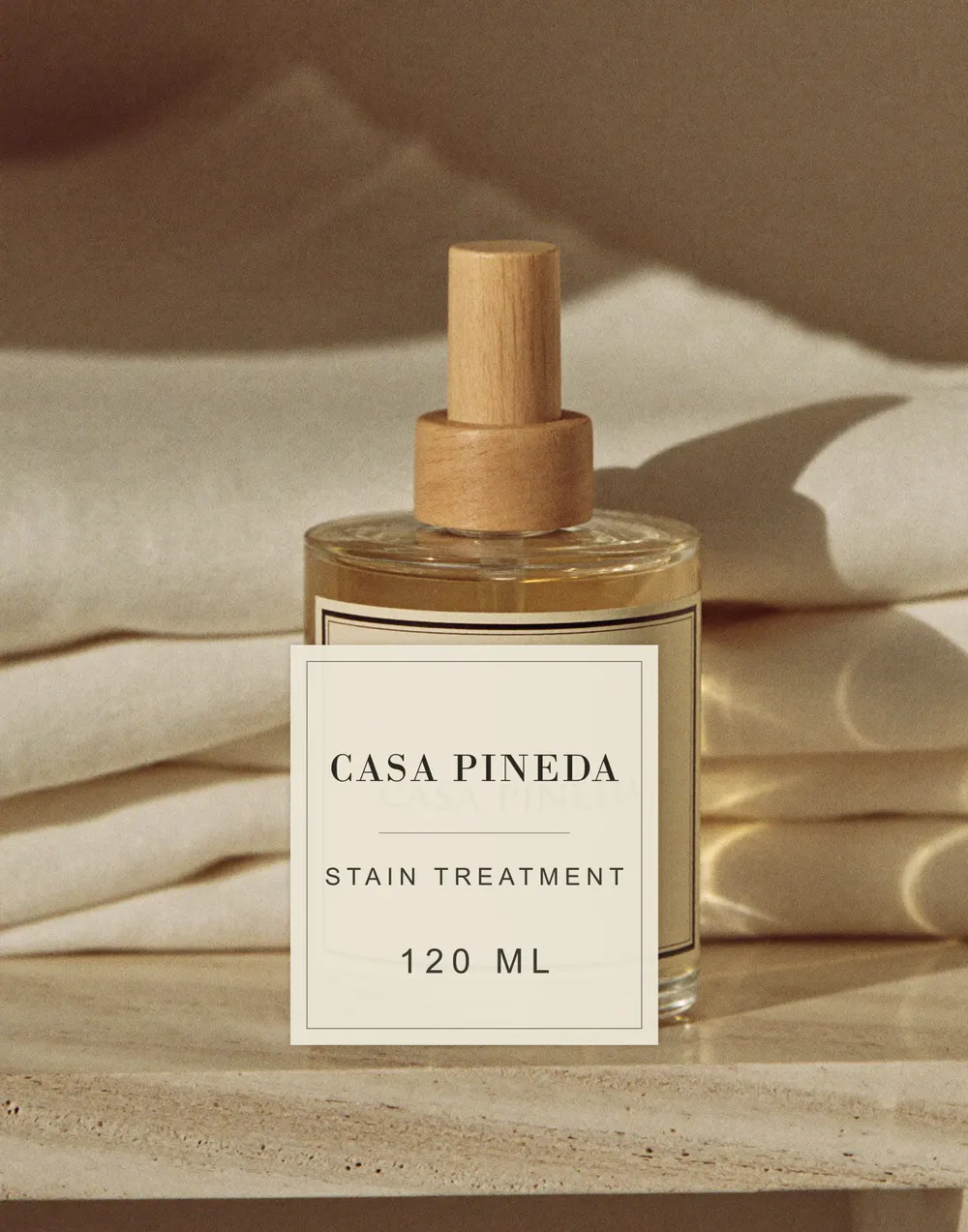
For food, drink and grass on cotton and linen, use Stain Treatment. Spray the mark, work it in with a soft brush in small circles and leave it for up to 15 minutes. Do not let it dry on the fabric. Then wash as usual. It contains enzymes, so avoid breathing the spray mist, and keep it off silk, wool and leather.
Shirt collars and cuffs pick up a grey line over time. Wet the collar, rub the Collar and Cuff Bar along the line, leave it for a few minutes and brush lightly before the shirt goes in. Doing this each time a shirt is washed stops the line from building up.
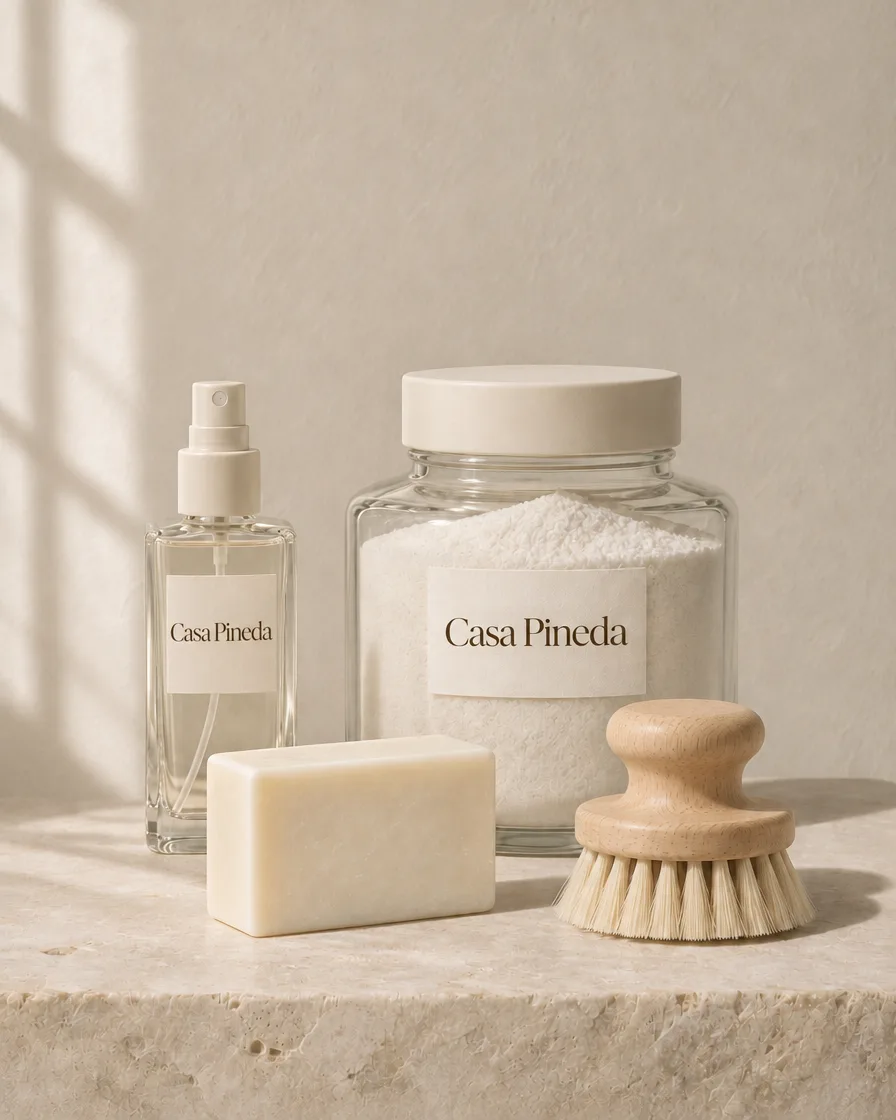
Whites that have turned dull or grey all over are not stained so much as tired. A long soak in oxygen brightener can help bring cotton and linen back toward white. Dissolve two scoops in warm water, soak the whites for one to four hours, then wash as usual. It is an oxidizer, so handle it with care: keep the jar dry and closed, use a mixed solution the same day, and never seal it in a bottle or closed container, because gas builds up. It is not for wool, silk, leather or colors that might run.
Some stains will not come out at home. Dried-on ink, old oil and anything that has already been through a hot dryer are the hardest. If a mark is still there after one treatment and a wash, it is worth one more try. After that, take it to a cleaner and tell them what the stain is.
Silk, wool and anything precious
Enzyme sprays and oxygen brightener are for sturdy cotton and linen, not for protein fibers like silk and wool. For a fresh mark on a knit, blot it, rinse from the back with cool water and wash the whole piece as described in our guide to washing wool by hand. For silk, rinse the mark with cold water, then wash the whole garment by hand in cold water with Silk Wash, quickly and with very little movement. For anything valuable, old or labelled dry clean only, go straight to a professional.
A few rules that save garments
- Never mix stain products with each other, with bleach or with other cleaning products.
- Let a treated garment air dry and check it in good light before it goes near a dryer or an iron.
- Keep stain products closed and out of reach of children and pets.
- Read the label on each product and follow its directions. They come before anything in a guide like this one.